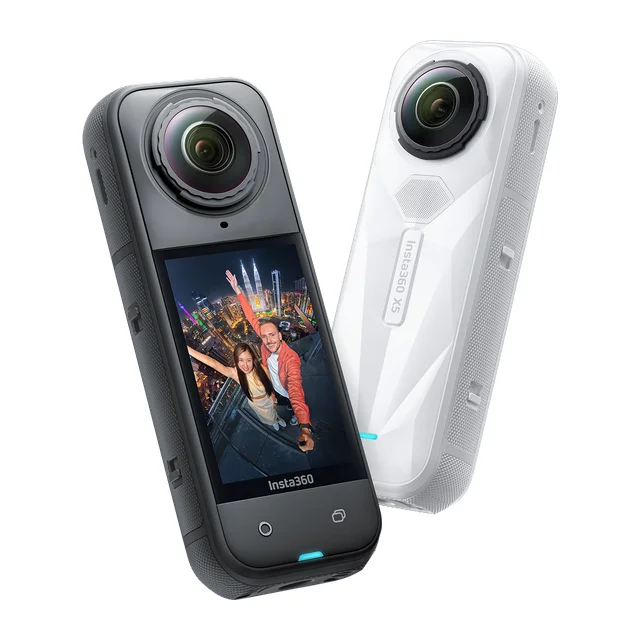
Insta360 X5
The 360 camera I film my rides on. Best when it's well below the X6's price.
US$549.99 at launch See today's price ↗ Jack's Coaching
By Jack, Jack's Coaching
Updated 7 November 2026
Filmed on my own rides
The buy buttons on this page are affiliate links to the Insta360 store. If you buy through them I earn a commission at no extra cost to you. Insta360 didn't see this article before it went up. The footage is mine; specs, battery figures and lab tests come from Insta360 and the reviewers I name and link at the bottom.
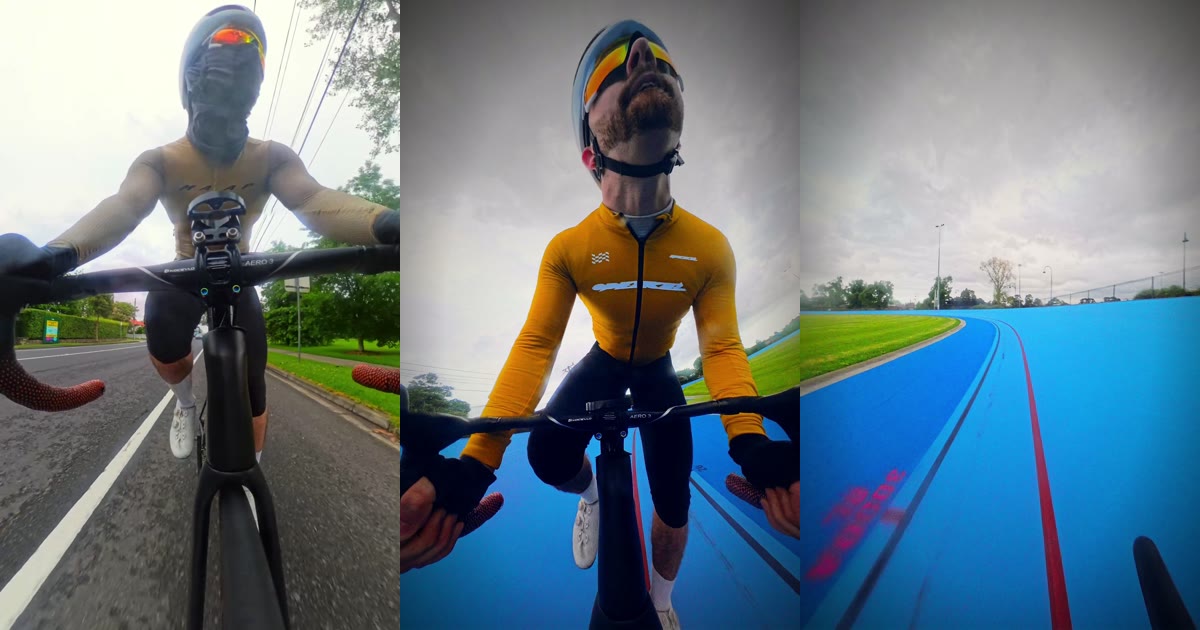
Yes. The Insta360 X5 is the 360 camera I film my rides on. One out-front mount gets you, your bike and the road in a single take, with the selfie stick edited out. It was US$549.99 at launch. The catch: the X6 replaced it in August 2026, so buy the X5 when it's clearly cheaper and you mostly ride in daylight.
Every clip on this page came off my X5. On the road it sits out in front of the bars on an invisible selfie stick. At the velodrome it was front-mounted for a sprint.
Afterwards I reframe the 360 footage to vertical for Shorts and Reels. That's the whole trick: you film once, then pick the angle later.
My take: it's an amazing camera. It's the best way I've found to get every angle without a bulky chest mount or a weird head mount. I set it and forget it, the stabilisation is great, the quality is good, and the battery lasts my normal rides. Reframing in the Insta360 app is quick and easy, and being able to pull different angles out of one ride is what makes it worth it. It's best in good light, not low light.
Below is what the footage looks like, and the answers to the questions riders ask before they buy one: which mount, which settings, battery, heat, rain, and whether the new X6 makes the X5 a bad buy.
The 360 camera I film my rides on. Best when it's well below the X6's price.
US$549.99 at launch See today's price ↗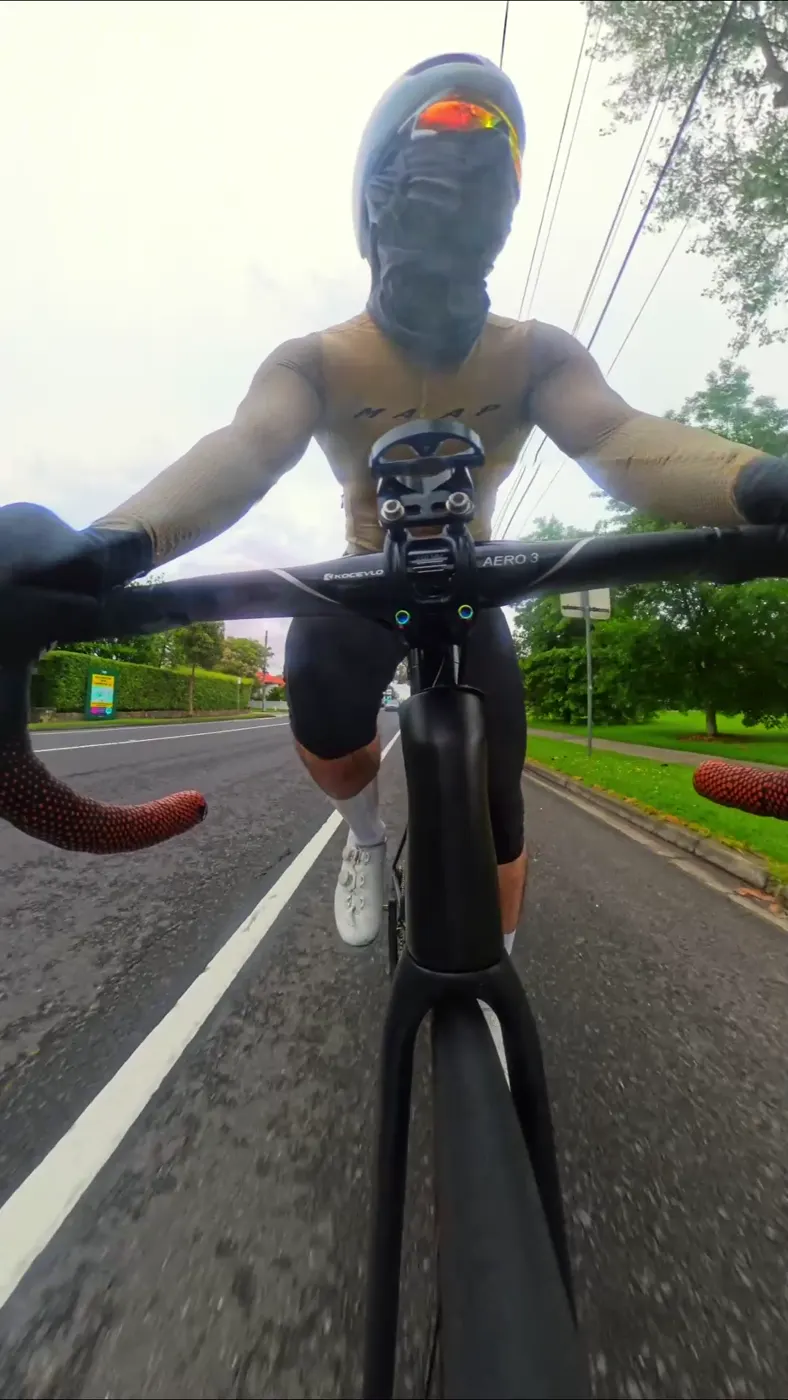
If you want video of yourself riding without a mate on a second bike or a drone, a 360 camera on an out-front mount is the easiest way to get it, and the X5 is the one I use. Spend more on the X6 if you film a lot at dusk or at night.
Yes. It's the camera I film my rides on, because one camera in front of the bars records me and the road at the same time.
A normal action camera points one way. If you want a shot of yourself and a shot of the road, you need two cameras or two rides. With a 360 camera you get both from a single file and choose the angle later.
road.cc's reviewer, who filmed a three-day audax on it, called being able to put it on an out-front mount and get "footage of yourself and the road ahead" at the same time "a huge bonus".
The downsides are real, though. The files are big, you have to reframe before you post, Insta360's own stem mount is rated for smooth roads, and the X6 is now the newer model. All of that is covered below.
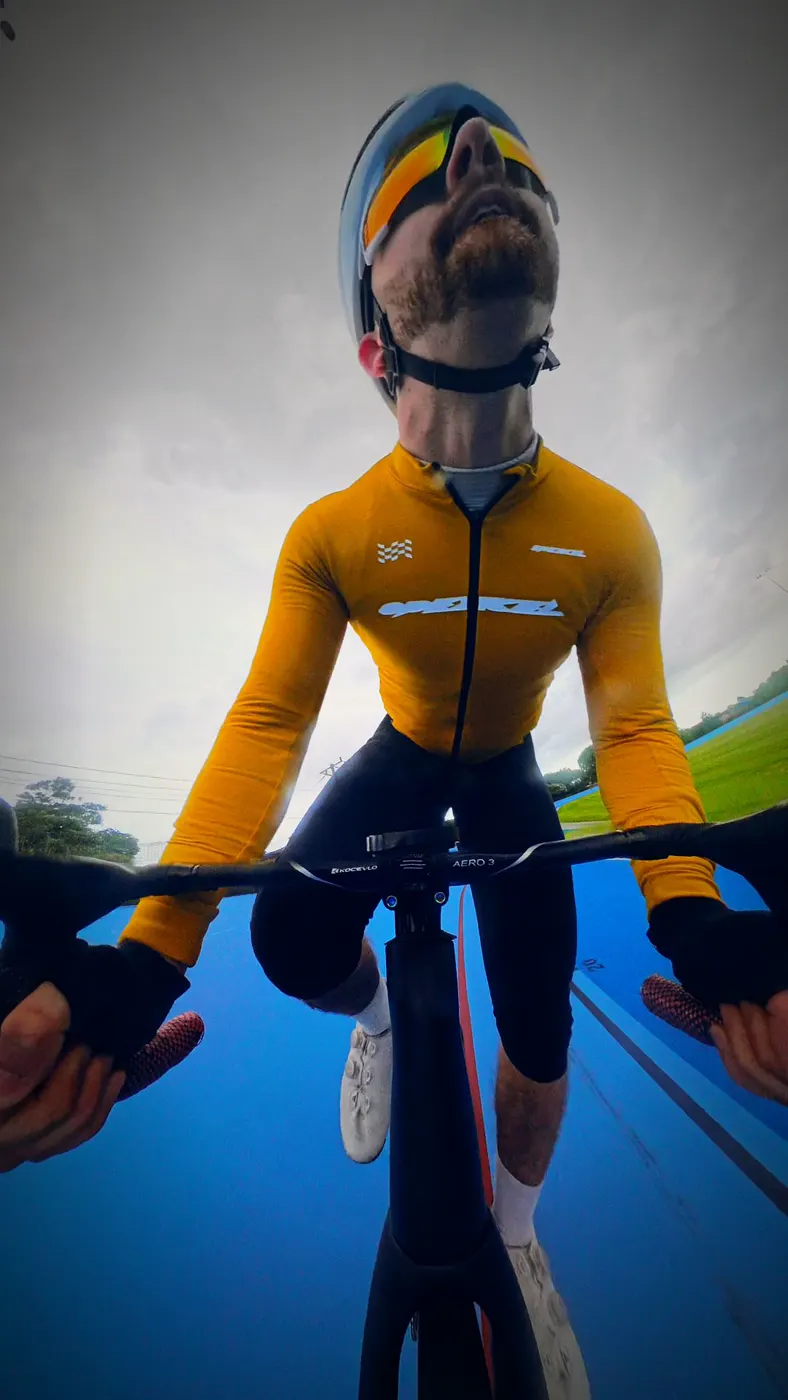
It looks like someone filmed you from a camera floating in front of the bike. Here's a sprint at the velodrome with the X5 front-mounted, reframed between a selfie view and a forward view of the track.
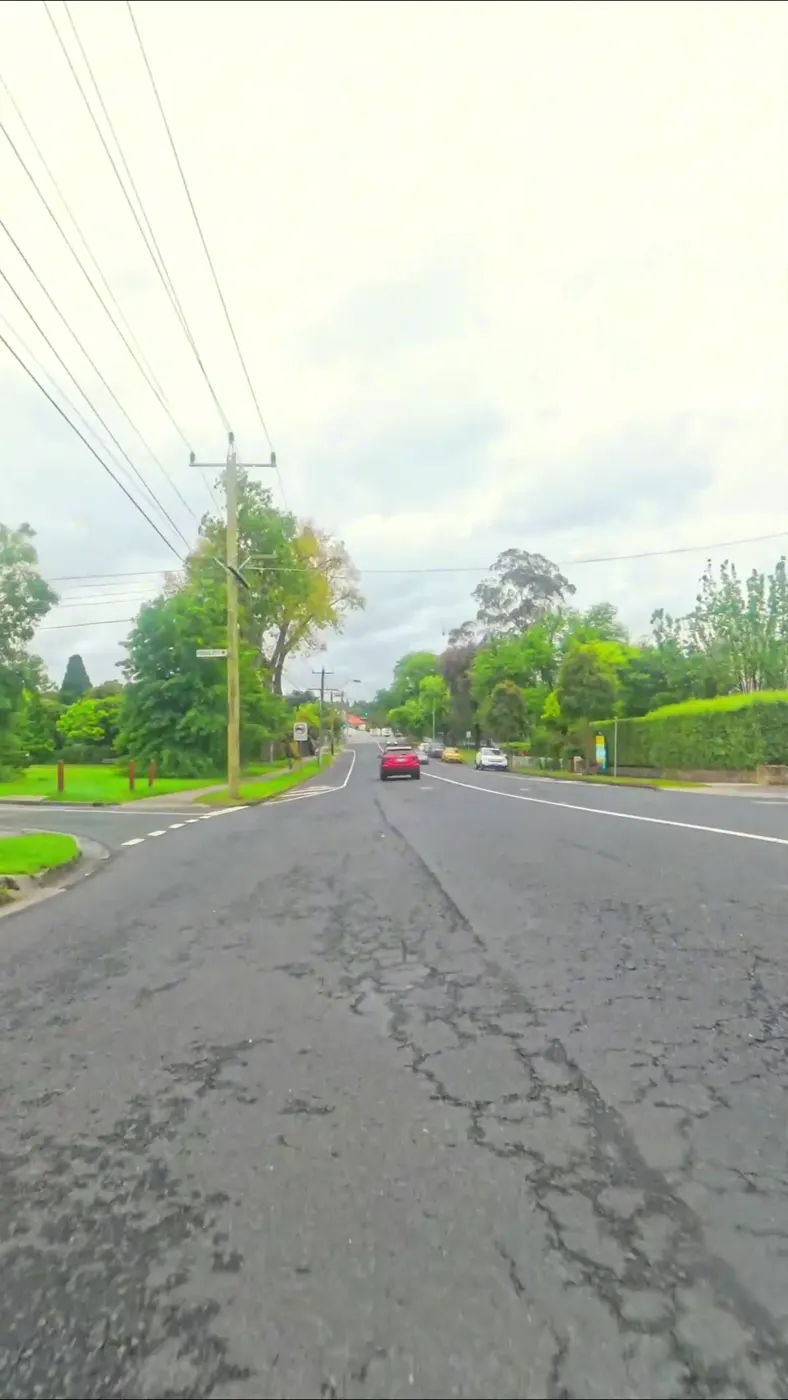
The forward view is the one that surprises people. Point the reframe ahead and the bike disappears, so it looks like a drone flying down the street at bar height. That clip was shot on an overcast day and you can still pick out the cracks in the asphalt.
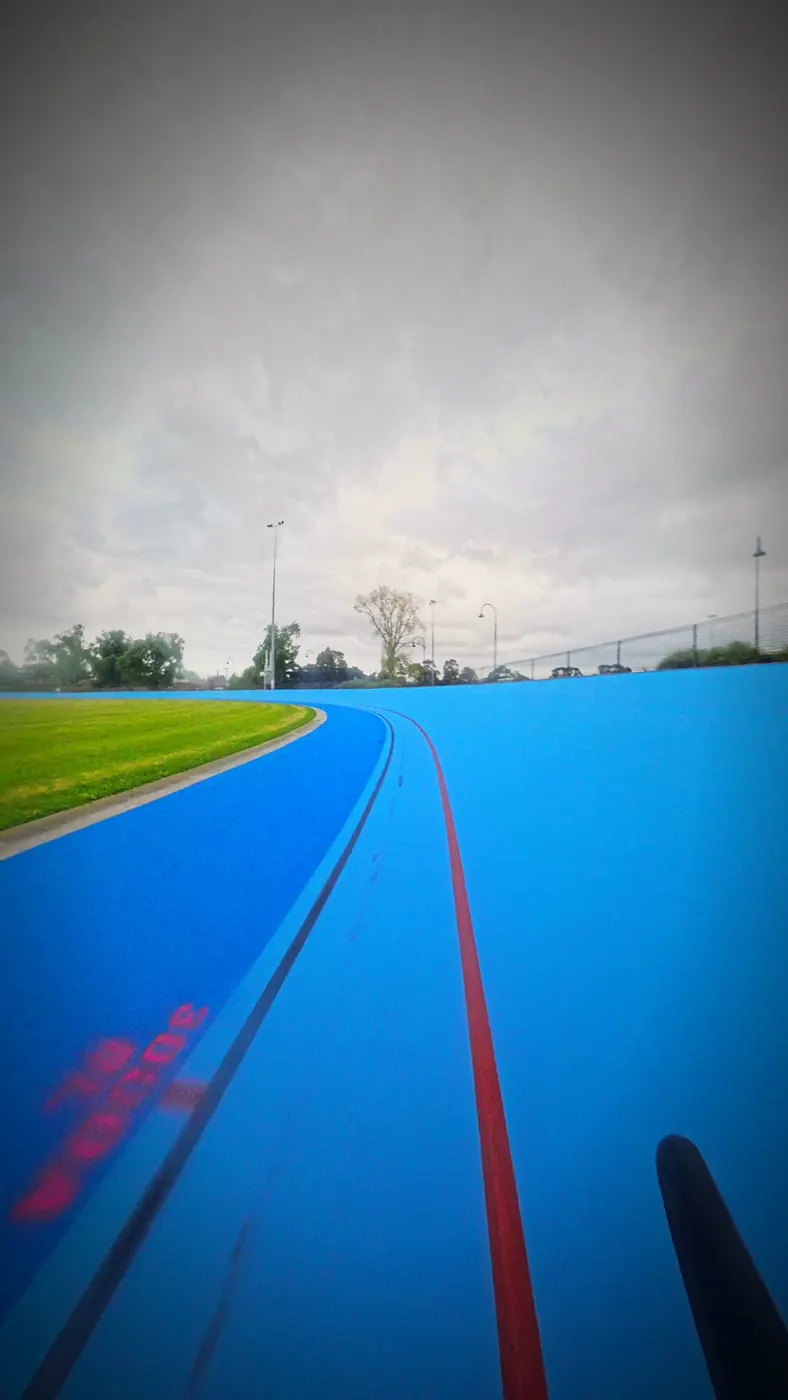
For riding, the specs that matter are battery life, waterproofing, low-light performance and the replaceable lenses. Here's Insta360's spec sheet, trimmed to what matters on a bike.
| Launch price | US$549.99 (April 2025) |
|---|---|
| Sensors | Dual 1/1.28", f/2.0 |
| 360 video | 8K30, 5.7K60, 4K120 |
| Single-lens video | Up to 4K60, like a normal action camera |
| Low-light mode | PureVideo, up to 8K30 |
| Battery | 2,400 mAh, removable. 93 min at 8K30, 135 min at 5.7K30, 208 min at 5.7K24 in Endurance Mode (lab figures) |
| Charging | 80% in 20 min with a 30 W USB-C PD charger |
| Waterproof | IP68, 15 m without a case |
| Operating temperature | -20 to 40 °C |
| Weight | 200 g |
| Mounting | 1/4" thread plus a magnetic quick-release system |
| Max bitrate | 180 Mbps |
| Lenses | User-replaceable |
The 40 °C upper limit is worth knowing if you ride through an Australian summer. That's Insta360's rated operating range, and Melbourne hits it on the worst days.
The best mount for road riding is out in front of the bars, on the stem or under an integrated bar, with a short invisible selfie stick. That's how my road footage is shot, and road.cc found it works very well.
I use a ZTTO handlebar mount from AliExpress. It does the job, and it means no chest harness or helmet mount.
| Mount | What you get | Watch out for |
|---|---|---|
| Out front (stem or under-bar) on a short stick | You, your bike and the road in one take. What my road clips use | Insta360 says its stem mount is for smooth roads. Check the bolts every ride |
| Seatpost or saddle, longer stick ("tail" or third-person view) | A follow-drone shot from behind | road.cc didn't feel comfortable going full tilt on descents with it bouncing behind. Smooth roads only |
| Helmet | All-round view from head height | road.cc says you can't really get yourself in shot, and you look a bit odd |
| Chest | First-person POV in single-lens mode, up to 4K60 | You lose the point of a 360 camera |
| Holding the stick | Any angle you like | Owners on Reddit warn one bump and you crash. Don't |
Take the vibration warning seriously. BikeGremlin's X5 broke at its mounting point after four months of gravel and city riding on Insta360's own stem mount, with no drops. The small steel plate with the screw thread came away from the plastic base.
Insta360 refused a refund, pointing to the small print on the mount's product page: it's only meant for slow riding on smooth paved roads.
Owners on r/Insta360 report the same type of failure, and their fixes are consistent: put the X5 in a metal cage so the load spreads across the whole body, keep the stick short, and retighten everything after every ride. Some also say a long handlebar stick visibly bounces on rough roads, and stabilisation can't fully hide it.
Before every ride: check the mount bolts, the stick joints and the camera screw. A loose 200 g camera at 40 km/h is a hazard to you and to everyone behind you.
Mostly, yes. In my handlebar and velodrome clips the stick doesn't show at all, and in the selfie view all you see is the clamp on the stem.
The X5 edits the stick out by default, road.cc notes, so the camera looks like it's floating in mid-air.
road.cc also pointed out the two things that can give it away: the stick's shadow on a sunny day, and a hand holding the stick, which sometimes looks slightly odd. On an overcast day like mine, with the stick mounted to the bike, neither shows up.
Start with Insta360's own recommendations: 8K30 in daylight, 5.7K30 with Active HDR when the sky is bright or you're riding into the sun, and PureVideo when the light drops.
| Riding conditions | Mode | Settings |
|---|---|---|
| Daylight | Video | 8K30, AdaptiveTone on |
| Bright sky, backlit, into the sun | Video | 5.7K30, AdaptiveTone and Active HDR on |
| Dusk, night, heavy tree cover | PureVideo | 8K30, AdaptiveTone on |
| Slow-motion sprints | Video | 5.7K60, or 4K120 for slower playback in good light |
| Audio at speed | Any | Wind noise reduction, strong |
The first three rows come from Insta360's X5 manual; the slow-motion and audio rows from Insta360's X5 tips guide. The manual also recommends exporting at 4K with the bitrate set to 50 in the Insta360 app.
road.cc's reviewer mostly shot at 5.7K with HDR, because Active HDR doesn't work in the two top modes (5.7K+ and 8K). road.cc also found the factory settings were "pretty much spot on", so you don't need to dig through every menu to get good footage.
If you don't want to reframe at all, Insta360 says InstaFrame mode records an auto-framed flat video alongside the 360 file, and its Fixed View suits a camera mounted on a bike. In the app, a one-tap Forward or Selfie View exports without manual reframing.
Insta360 rates the X5 at 93 minutes at 8K30, 135 minutes at 5.7K30 and up to 208 minutes at 5.7K24 in Endurance Mode. Those are lab figures at 25 °C.
TechRadar got about 90 minutes of 8K30 on a full battery. Trusted Reviews found 8K recording plus transferring footage to a phone ran the battery down quickly, and thinks the longest claimed run times only apply with the settings turned right down.
In my experience it lasts my normal rides. If yours are longer than that, you have three options: drop to 5.7K, carry a spare battery (it's removable, and Insta360 says it fast-charges to 80% in 20 minutes), or only record the good sections. road.cc notes Insta360 also sells a bigger 2,800 mAh endurance battery.
It can at 8K when it isn't moving, but airflow on a moving bike helps a lot. In TechRadar's test at room temperature, the X5 shut itself down after 47 minutes of 8K30, against just under 30 minutes for the GoPro Max 2.
Owners on Reddit report the pattern you'd expect: still and in direct sun, warnings and shutdowns after 20 to 30 minutes; on a moving bike, one road cyclist reported recording 8K30 until the battery died, with no overheating.
Insta360's manual says it's normal for the X5 to get warm at 8K, and suggests turning off the AI Highlights Assistant and setting a shorter screen sleep time. On a hot day, drop to 5.7K and don't leave it recording while you stop at the café.
Yes. Insta360 rates the X5 IP68 and waterproof to 15 m without a case, so rain and road spray are nowhere near its limit.
Insta360's manual lists the checks that matter: the battery door and USB cover seals should be clean and fully closed, with the orange indicator hidden. It also says to remove the lens guards around water, because they aren't waterproof.
Water drops on the lenses will still show in the footage, so give them a wipe when you stop. And if you charge on the go in the wet, Insta360 sells an all-weather USB charging cover for that.
Good for a 360 camera, thanks to PureVideo mode. It's the X5's biggest advantage over the GoPro Max 2, though the newer X6 is better again.
road.cc's reviewer made PureVideo his go-to setting on dull days and under tree cover, and called it a big step up from older Insta360s. TechRadar said PureVideo keeps footage "remarkably clean and crisp" in conditions where the Max 2 produces grainy, smeary results.
My road clip was shot on a grey, overcast day, and the detail holds up. Still, in my experience it's at its best in good light rather than low light. For proper night riding, Trusted Reviews and WIRED both found the X6 clearly better.
Well enough for usable audio, according to road.cc. The X5 has a built-in steel-mesh wind guard and an AI wind noise reduction mode, and road.cc got usable sound straight from the camera even riding fast or into a headwind.
road.cc found audio a bit better with the mic side facing you, which means the screen faces away. On a 360 camera that doesn't matter, because you choose the framing afterwards.
For clean voiceover while riding, TechRadar's advice is an external mic. The X5 pairs with Insta360's Mic Air and other Bluetooth mics.
You replace it yourself. The X5's lenses are user-replaceable, and The Verge reported a replacement lens kit at US$29.99 at launch.
road.cc ruined a lens at the Brompton World Championships and says "replacing a lens takes a couple of minutes." On older 360 cameras, a scratched lens meant a paid repair or a camera you couldn't use any more.
The X5's swap needs a tool, according to TechRadar; the GoPro Max 2's lenses twist off by hand. Insta360 says the X6's second-generation lenses are cheaper to replace.
Big. Insta360 lists a maximum bitrate of 180 Mbps, which by my maths works out to roughly 80 GB per hour of footage at that setting.
road.cc's reviewer said their phone "struggled both with processing and with storage at times", and used the desktop app for longer edits. road.cc also found exports above 1440p added file size without much extra detail, unless you're cropping in tight.
How long editing takes depends on how fussy you are. The app's one-tap Forward and Selfie Views, InstaFrame and AI auto-edit are there to cut it right down. My clips on this page are simple reframes to vertical, and I find reframing in the app quick and easy.
It can, but it isn't built for it. The X5 has Loop Recording and Road Mode, which keep recording and overwrite the oldest footage when the card or the space you set fills up, and a 360 file catches what happens behind you as well as in front.
The limits are the same ones covered above: 93 minutes at 8K, heat when you're stopped, and a big camera on a stick that needs checking every ride. Insta360's own loop recording guide suggests its small GO cameras for nonstop cycling POV.
For a daily commute where you only want footage when something goes wrong, a dedicated bike camera that runs for hours makes more sense. Use the X5 for the rides you want to film.
Buy the X5 if it's clearly cheaper than the X6 and you mostly ride in daylight. Get the X6 for dusk and night riding. The X4 is only worth it second-hand and cheap. The GoPro Max 2 suits riders who want GoPro mounts and built-in GPS.
I film on the X5. The X4, X6 and Max 2 columns come from the makers' spec pages and the reviews I name.
| Insta360 X4 | Insta360 X5 | Insta360 X6 | GoPro Max 2 | |
|---|---|---|---|---|
| Launch price | US$499.99 (2024) | US$549.99 (2025) | US$699.99 (Aug 2026) | US$499.99 (2025) |
| Sensors | 1/2" | 1/1.28" | 1/1.1" | Not in GoPro's launch specs |
| Max 360 video | 8K30 | 8K30 | 8K50 | 8K30 |
| Battery at 8K30 | 75 min claimed | 93 min claimed, about 90 min in TechRadar's test | 140 min claimed | Just over 60 min in TechRadar's test |
| Waterproof, no case | 10 m | 15 m | 20 m | 5 m |
| Replaceable lenses | No (lens guards only) | Yes, with a tool | Yes, second generation | Yes, tool-free |
| Low-light mode | No PureVideo | PureVideo | Larger sensors, new low-light mode | Weak in TechRadar's test |
| Built-in GPS | No | No (phone, remote or watch for stats) | No | Yes |
| Weight | 203 g | 200 g | 196 g | 195 g |
The X6 is the better camera, and it costs more. Insta360 says it has 33% more sensor area, 8K50, 140 minutes at 8K30, 20 m waterproofing and built-in storage.
Reviewers agree the gap shows most at dusk and at night. Trusted Reviews says the X5 "remains a brilliant option" if you're budget conscious, and WIRED called the X6's basic video quality "comparable to the X5", with the X6 winning at night. If the X5 is selling well below the X6 when you check, that gap is the reason to buy it.
Get the X5 unless an X4 is very cheap. The X5 has bigger sensors, PureVideo, replaceable lenses and 15 m waterproofing against the X4's 10 m. For a camera that lives on a bike, the replaceable lenses alone are worth it.
TechRadar picked the X5 overall: longer battery, better heat management, much better low light, better wind noise handling and better apps. The Max 2 won on daylight sharpness, tool-free lens swaps, built-in GPS and its three mounting systems, including GoPro's fold-out fingers.
Buy the X5 if you want to film yourself riding, mostly in daylight, without a second camera or a friend. Skip it if you mainly ride at night, want a set-and-forget safety camera, or don't want to edit.
Yes. It's the 360 camera I film my rides on. One camera on an out-front mount records you and the road at the same time, the selfie stick disappears from the footage, and the lenses are replaceable after a crash. The catches are big files, heat at 8K when you stop moving, and a newer X6.
An out-front mount on the stem or under an integrated bar, with a short invisible selfie stick. That's how my road footage is shot, and road.cc rates the out-front view highly. Insta360 says its stem mount is for smooth roads, so owners add a metal cage and check the bolts after every ride.
Mostly, yes. In my handlebar and velodrome clips the stick doesn't show, and in the selfie view you only see the clamp on the stem. road.cc found the same and says the stick's shadow on a sunny day is what gives it away. A hand holding the stick can also look slightly odd.
Insta360 rates it at 93 minutes at 8K30, 135 minutes at 5.7K30 and up to 208 minutes at 5.7K24 in Endurance Mode, all lab figures. TechRadar got about 90 minutes at 8K30. For a long ride, drop to 5.7K, carry a spare battery or only film the best sections.
Insta360's manual recommends 8K30 for daytime, 5.7K30 with Active HDR for backlit scenes and PureVideo for low light. road.cc mostly rode at 5.7K with HDR. Turn wind noise reduction on, and use InstaFrame or the app's one-tap Forward View if you want a flat clip without reframing.
Yes. Insta360 rates it IP68 and waterproof to 15 m with no case, which is far beyond rain and road spray. Before a wet ride, check that the battery door and USB cover seals are clean and fully closed, and take the lens guards off around water, as Insta360's manual advises.
Buy the X5 if it's clearly cheaper and you mostly ride in daylight. The X6 (US$699.99 at launch in August 2026) adds bigger sensors, 8K50, a longer battery and better low light, and reviewers say the difference shows most at dusk and at night. For daytime road footage, the X5 still holds up.
For most riders, yes. TechRadar picked the X5 overall for its longer battery (about 90 minutes at 8K against just over 60), 15 m waterproofing against 5 m, and much better low light. The GoPro Max 2 had sharper daylight footage, tool-free lens swaps, built-in GPS and native GoPro mounting fingers.
It can, but it isn't built for it. The X5 has Loop Recording and Road Mode, which overwrite the oldest footage, and the 360 view catches what's behind you. Battery life, heat and card space limit all-day use, though, so a dedicated bike camera suits a daily commute better.
Yes, if you want to film yourself riding and you can get it well below the X6's price. It's the camera all of my riding footage on this page came from. Put it out front, keep the stick short, check the bolts, and you get shots that used to need a second rider or a drone.
Questions? Ask me on YouTube, where most of my X5 footage ends up.
Making your bike faster too? See cheap aero upgrades and the AliExpress upgrades on my bike.
Owner reports from r/Insta360 are summarised in the mount and heat sections. All footage and stills on this page are from my own X5.