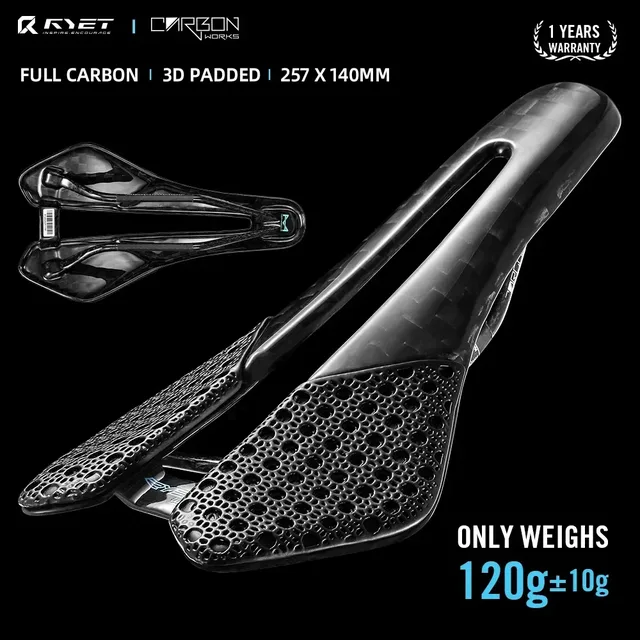
RYET hybrid 3D printed saddle
Carbon nose, 3D printed rear, big cutout. About 120 g.
About US$80
Buy on AliExpress ↗
 Jack's Coaching
By Jack, Jack's Coaching
Updated 7 November 2026
Bought with my own money
The buy buttons on this page are affiliate links. If you buy through them I may earn a small commission at no extra cost to you. No brand sent me these saddles or saw this review.
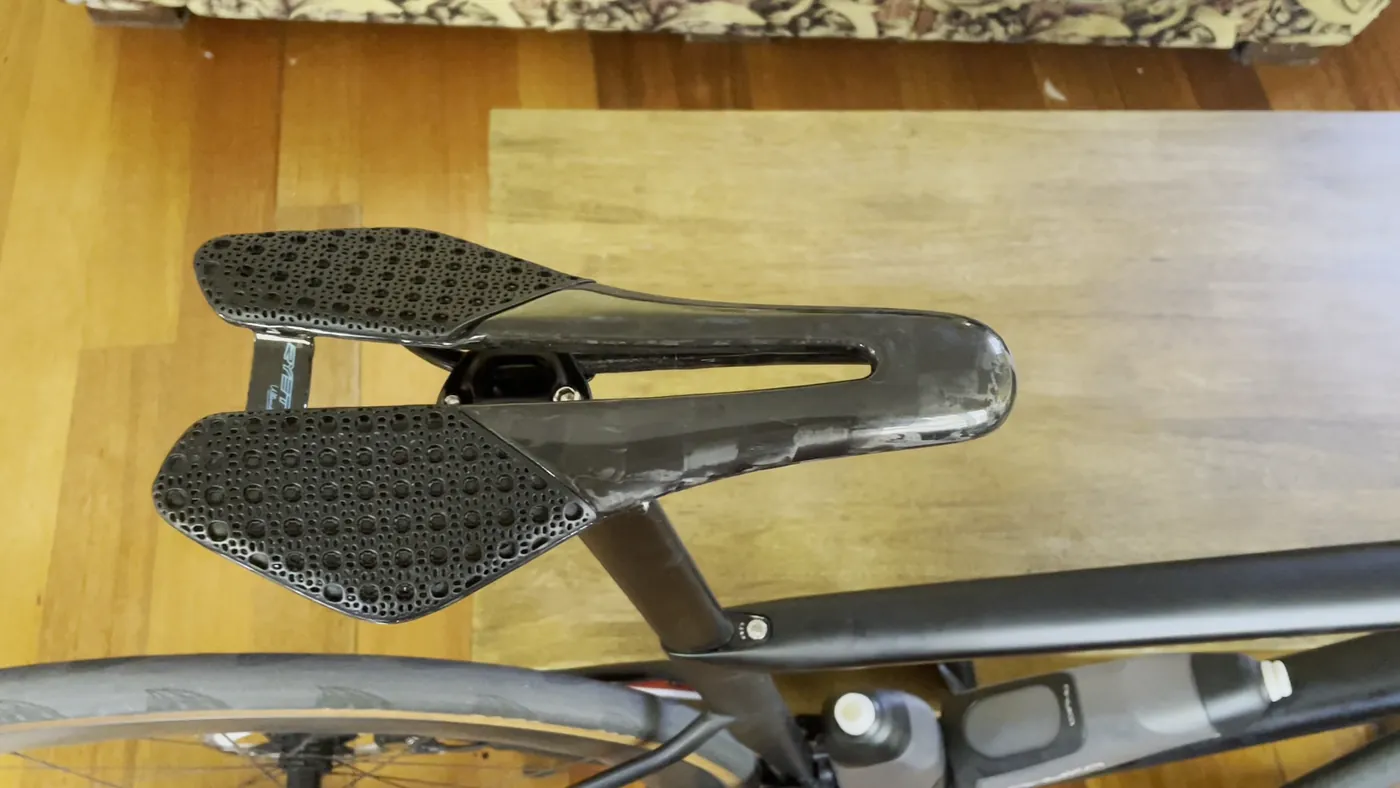
The best cheap 3D printed saddle I've tested is the RYET hybrid: about 120 g, about US$80, and the most comfortable saddle I've ridden in 15 years. The catch: it's very firm, and the carbon rails need the right clamp and a torque wrench. Tighter budget or want a softer mesh? Get the US$39 PLSELIS.
Carbon nose, 3D printed rear, big cutout. About 120 g.
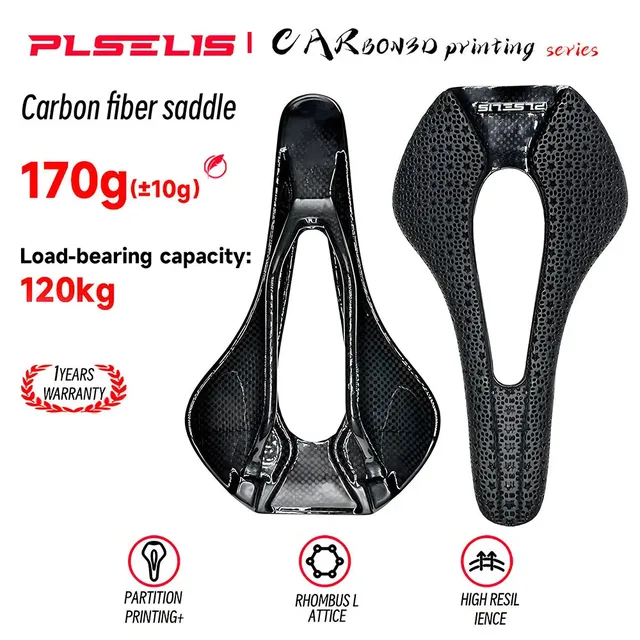
Softer mesh, bigger cutout, great for wide sit bones. About 170 g.
I've been riding for 15 years and I've gone through more than 10 saddles: Selle SMP, Selle Italia, Specialized Power, Toupé, Fizik Arione. When 3D printed saddles arrived I wanted one, but the big brands charge US$330 to US$475.
So I went to AliExpress and bought four cheap carbon saddles, three of them from RYET. One sent me to the doctor. One cracked. Two are brilliant.
Buy the RYET hybrid (carbon nose, 3D printed rear) if you want a light, comfortable race saddle for about US$80. If you have wide sit bones or want a softer surface for less money, get the PLSELIS for about US$39.
For me it has to be light, comfortable, strong enough for an 85 kg sprinter, and under US$80. Saddles are personal, so if your list looks different, my pick might not be yours.
The RYET hybrid won. The PLSELIS is the budget pick, the original RYET gave me pressure problems, and the RYET ultralight cracked.
| Weight (mine) | Surface | Cutout | Verdict | |
|---|---|---|---|---|
| RYET full 3D printed | 173 g | 3D printed | Small | Rigid and light, but gave me pressure problems |
| PLSELIS 3D printed | About 170 g | 3D printed, softer | Large | Best budget pick, about US$39 |
| RYET ultralight | 97 g | Faux leather | Medium | Flexed and cracked. Returned |
| RYET hybrid | About 120 g | Carbon nose, 3D printed rear | Large | Winner, about US$80 |
It's comfortable to sit on, but its small cutout gave me pressure problems on long rides. It's full carbon with a 3D printed top, very rigid, and 173 g on my scale.
I liked it enough to own three (one was stolen off my bike). But I have wide sit bones, and on long rides I started getting pressure on my perineum. It got bad enough that I went to the doctor about it.
If you've got narrow sit bones you might be fine on it. For me it was the reason I kept looking.
Yes. At about US$39, it's the saddle I'd tell most people to try first, especially if you have wide sit bones.
It came on my TanTan X68. The cutout is much bigger than the original RYET's, and the 3D printed mesh is softer and smoother. It weighs about 170 g.
I moved it to my Giant TCR and I've done hundreds of kilometres on it with no issues. It also survived my crash.
Buy the PLSELIS if you have wide sit bones, you want a softer surface, or you want to try a 3D printed saddle without spending US$80.
Skip it if every gram counts. It's about 50 g heavier than the RYET hybrid.
Not for me. It flexed under me and cracked at 85 kg, so I returned it.
At 97 g it was the lightest saddle I've ever held, with a faux leather top instead of a 3D printed one. On paper it was everything I wanted. The shell just wasn't stiff enough for my weight.
A light climber might get away with it. I still wouldn't recommend it, and I don't link to it.
Because it uses two surfaces: smooth carbon at the nose and middle so your thighs don't rub, and a 3D printed rear third that holds your sit bones still. It's my GOAT saddle.
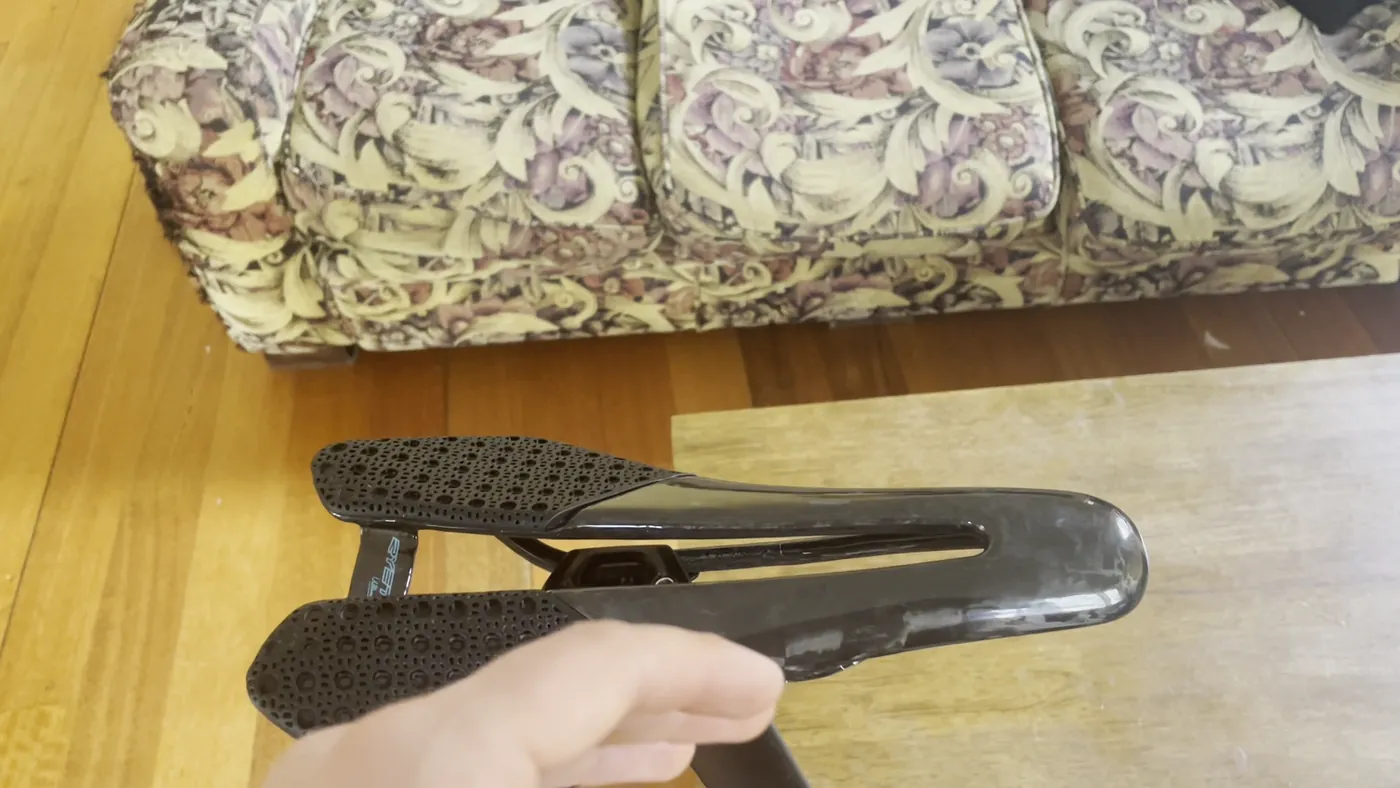
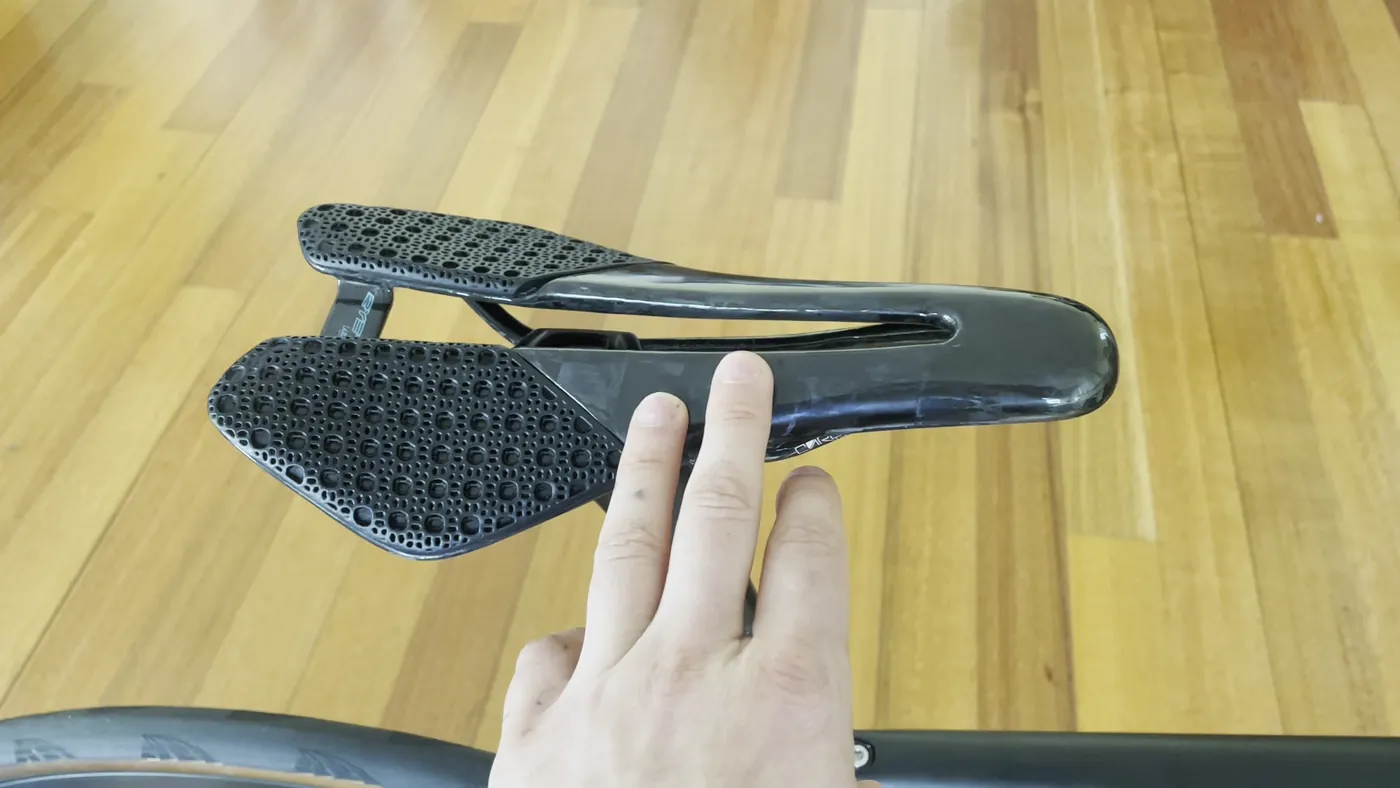
Half carbon, half 3D print sounds strange. Here's why it works:
Mine weighs about 120 g and cost about US$80. It's been my race saddle ever since, and it's part of how I got my X68 down to 6.95 kg.
Buy the RYET hybrid if you want a light short-nose race saddle, you like a firm seat, and you get thigh rub on full 3D printed saddles.
Skip it if you want a plush, flexy saddle, or you're near the weight limit and want the safety net of a big-brand warranty.
The 3D printed rear locks your sit bones in. The carbon nose doesn't rub. That's the whole trick.
It's firm, and whether that's a problem depends on you. The carbon shell doesn't flex at all, so the 3D printed layer is the only give you get.
Owners on Reddit are split. Some find the RYET mesh very firm and end up with sit-bone pain. Others call it the best saddle they've ever owned.
I'm in the second camp: I prefer a stiff saddle. nikinik, who has ridden a RYET Aircode for three years, puts most of their comfort down to width (theirs is 150 mm) rather than padding, plus standing up regularly. If a firm saddle hurts, check the width and your setup before blaming the mesh.
Get the width that matches your sit bones. Measure them first, because wide sit bones need a wider saddle.
I have wide sit bones. On the original RYET's small cutout I ended up at the doctor, and the problem went away on saddles with a much bigger cutout. If you're in the same boat, look at the cutout as well as the width.
| Width | Source | |
|---|---|---|
| RYET hybrid (mine) | 140 mm | My saddle (257 x 140 mm) |
| Most RYET 3D printed models | 143 mm | RYET manual |
| Wide RYET option | 155 mm | RYET manual (one model) |
| RYET Aircode | 150 mm | nikinik |
| Specialized S-Works Power with Mirror | 143 mm | Specialized |
There's no clear winner: it comes down to your backside. RYET sells EVA (foam-topped) versions alongside the 3D printed ones, and owners on Reddit like both.
I ride the 3D printed hybrid and haven't tested a RYET EVA saddle, so the EVA column below is what owners report, not what I've felt.
| 3D printed top | EVA foam top | |
|---|---|---|
| Weight | Heavier | Lighter (about 35 g on one model, per owners) |
| Feel | Firm, holds your sit bones in place | Some owners prefer it |
| Bib shorts | Rough surface can wear them, per owners | Foam top, no 3D mesh |
| Dirt | Grit can get trapped in the mesh off-road | Foam top, no 3D mesh |
If you're worried about your shorts, the hybrid is a middle ground. Only the rear third is 3D printed, and the nose is smooth carbon.
It's a lot closer than the price suggests. The RYET hybrid costs about a sixth of an S-Works Power with Mirror, but it's firmer and you give up the testing and the warranty.
The saddles RYET is copying are the Specialized S-Works Power and Romin with Mirror, and Fizik's Adaptive range.
| Typical price | Weight | Shape | |
|---|---|---|---|
| RYET hybrid | About US$80 | About 120 g | Short nose, carbon front, 3D printed rear |
| PLSELIS 3D printed | About US$39 | About 170 g | Short nose, full 3D printed top |
| Specialized S-Works Power with Mirror | US$474.99 | 190 g (BikeRadar measured 188 g) | Short nose, full 3D printed top |
| Fizik Vento Argo 00 Adaptive | About US$400+ | About 186 g | Short nose, full 3D printed top |
The big brands give you proper testing, padding density tuned for different zones, a warranty and a shop that'll sort it out if it breaks. You're paying five or six times more for that.
Reviewers who've compared them say the RYET is firmer at the nose than the branded versions, and I'd agree that the cheap ones are stiffer overall. I actually prefer that. If you want a plush saddle, the big brands are better.
RYET's manual sets a 120 kg system weight limit, which means rider, bike and gear added together. And yes, some models do break.
That limit is tighter than it sounds. I'm 85 kg on a 7 kg bike, so I'm about 92 kg before kit and bottles. A 105 kg rider on a 9 kg bike is already at 114 kg before they've filled a bottle.
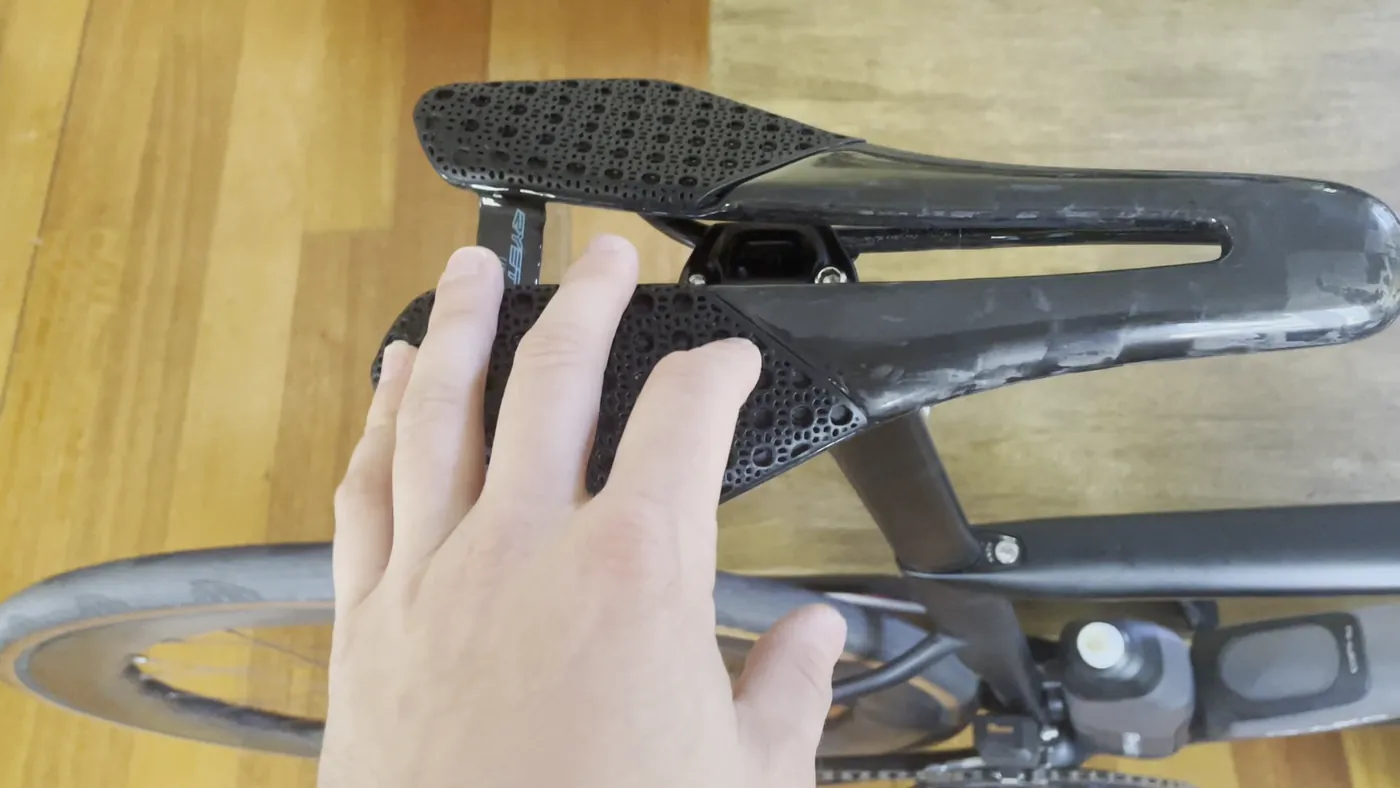
Be honest with yourself about your weight. My 97 g ultralight cracked at 85 kg, well under any limit. The heavier RYET and PLSELIS models have been fine for me, and other reviewers report thousands of kilometres on theirs. Some owners do report cracked shells or rails, and claimed weights vary between batches.
To stay safe: buy from a seller with lots of reviews, check the listing's weight limit, tighten the clamp with a torque wrench to the seller's spec (usually 5 to 6 Nm), make sure your seatpost clamp suits 7x9 mm oval carbon rails, and check the shell and rails for cracks every so often. RYET's manual also says to inspect the saddle after any impact.
Clamp the rails properly first, then set height, tilt and fore-aft in that order. A great saddle will feel terrible if it's in the wrong place.
Change one thing at a time, and ride a few times between changes.
Moving to a short-nose saddle like these? Measure your old saddle's height and where its widest part sits relative to the bars before you swap. Then put your sit bones back in the same spot instead of lining up the nose.
The RYET hybrid is. It has a carbon nose and a 3D printed rear, weighs about 120 g, costs about US$80 and is the most comfortable saddle I've ridden in 15 years. Not every RYET suits everyone, though: the original full 3D printed model's small cutout gave me pressure problems, and the 97 g ultralight cracked under me.
It's firm, and that splits riders. The carbon shell has no flex, and owners on Reddit report everything from sit-bone pain to calling it the best saddle they've owned. I like a firm saddle. If you want plush, the big-brand 3D printed saddles are softer, and the US$39 PLSELIS has a softer mesh.
There's no single winner. Owners on Reddit say the EVA (foam-topped) versions are lighter, about 35 g lighter on one model, and some prefer them. Others like the 3D printed surface. I ride the 3D printed hybrid because its rear locks my sit bones in place. I haven't tested a RYET EVA saddle.
It can. Owners on Reddit report the rough 3D printed surface wearing through bib shorts, and grit trapped in the mesh is a worry if you ride off-road. It's one reason I like the RYET hybrid: only the rear third is 3D printed, and the smooth carbon nose means less friction on my inner thighs.
RYET's manual says 120 kg, and that's system weight: rider, bike and gear added together. I'm 85 kg on a 7 kg bike, so about 92 kg before kit. Heavier riders have less margin than the number suggests. Avoid the ultralights, check the listing's limit and inspect the saddle after any impact.
My RYET hybrid is about 120 g, the original full 3D printed RYET was 173 g on my scale and the ultralight was 97 g. Real weights drift from listings: one Reddit owner measured 193 to 194 g on a saddle claimed at 190 g, and nikinik says owners' Aircodes weigh 155 to 196 g against a claimed 165 g.
It's closer than the price suggests. The S-Works Power with Mirror is US$474.99 and 190 g, and you get proper testing, padding tuned by zone and a warranty. The RYET hybrid is about US$80 and about 120 g. Reviewers say the RYET is firmer, so if you want plush, pay for the Mirror.
Pick the width that matches your sit bones. Get them measured first: wide sit bones need a wider saddle. RYET's manual lists 143 mm for most models and 155 mm for one. I have wide sit bones, and my pressure problem went away when I moved to a saddle with a much bigger cutout.
Use a torque wrench every time and stick to the seller's spec, which is usually 5 to 6 Nm. nikinik treats 5 to 6 Nm as the maximum and puts carbon paste on the rails. RYET's rails are 7x9 mm oval carbon, so your seatpost clamp must be made for 7x9 oval carbon rails.
You don't need to spend US$400 on a 3D printed saddle. The RYET hybrid is the most comfortable saddle I've ridden in 15 years and it cost me about US$80. If it's out of your budget or you want a bigger, softer cutout, start with the PLSELIS.
More from the build: AliExpress upgrades that took my bike to 6.95 kg, cheap aero upgrades and the best budget smart trainer.
Every weight, price and ride impression without a source is from my own bike, my own scale and my own receipts. Owner reports are summarised from Reddit threads in r/cycling and r/bicycling.